What Is the Cataract Surgery with Premium IOL?
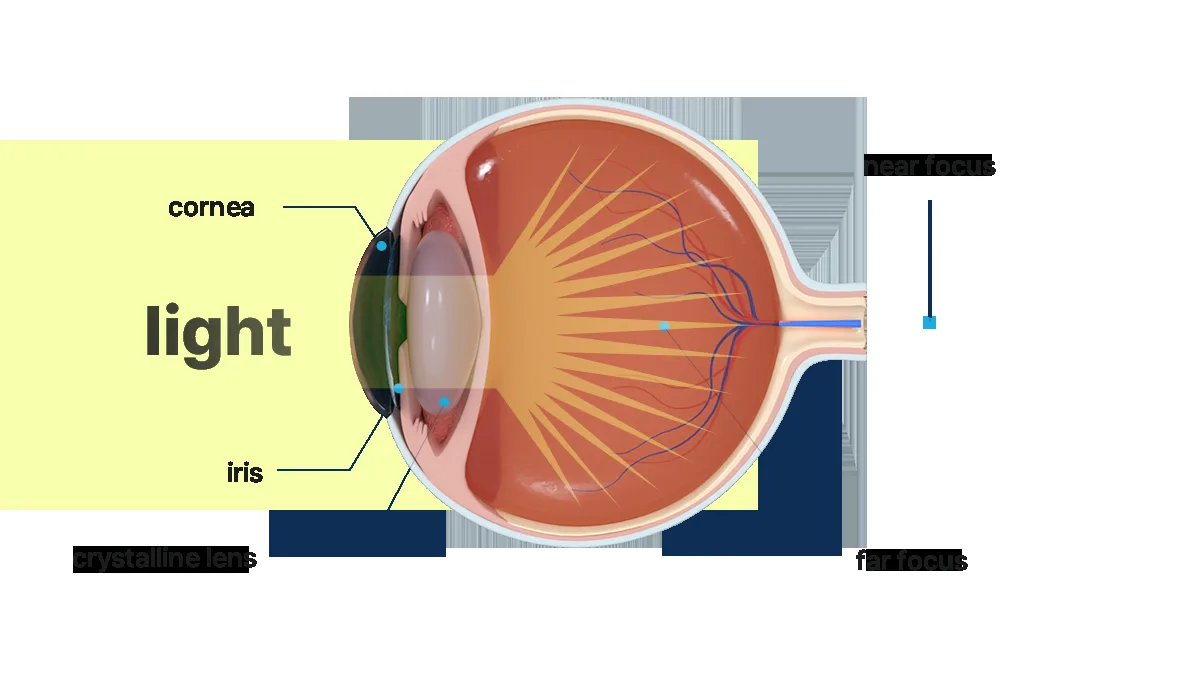
A cataract is a clouding of the eye's natural lens, most commonly developing after age 50 — though it can also appear in younger patients due to trauma or other conditions. During cataract surgery, the clouded lens is removed and replaced with an artificial intraocular lens (IOL) to restore clear vision.
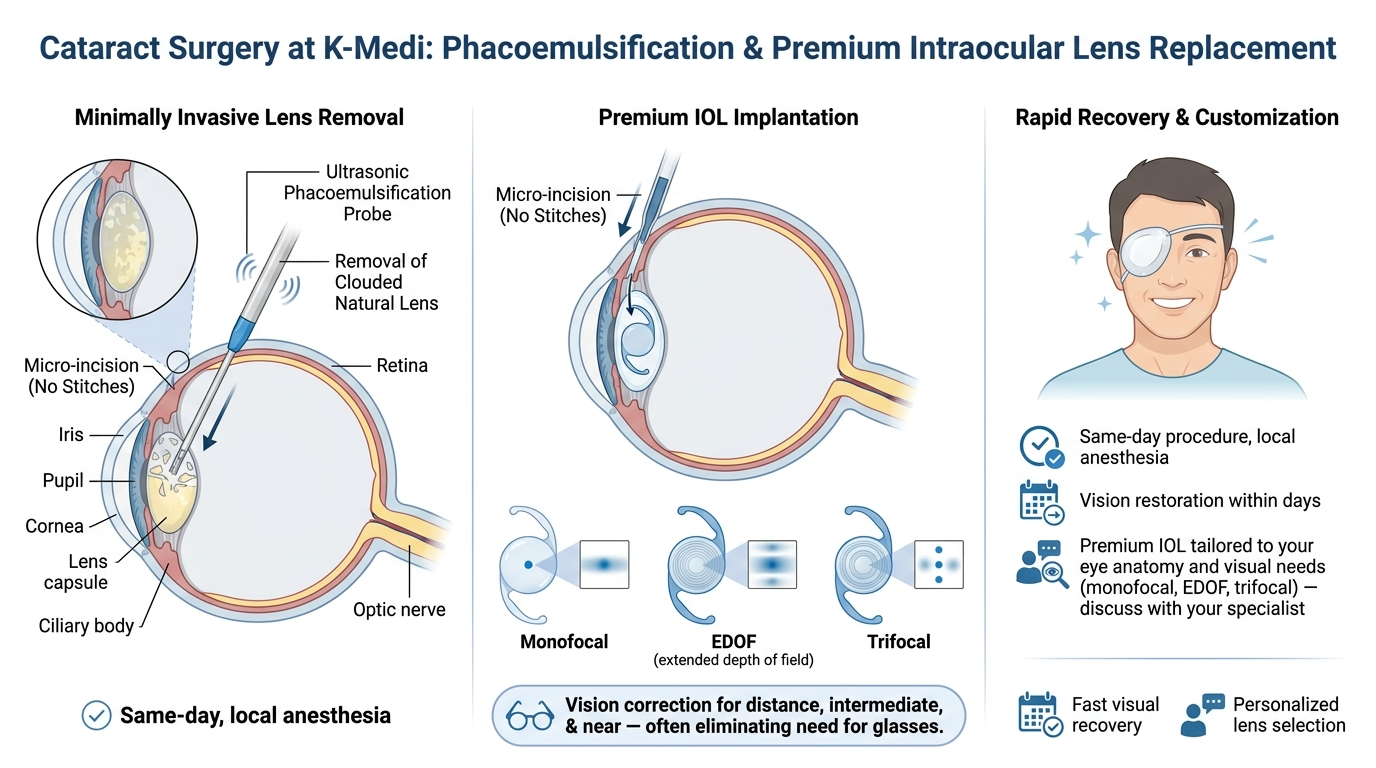
Cataract Surgery at K-Medi uses phacoemulsification — the gold-standard minimally invasive technique — to remove the clouded natural lens through a micro-incision and replace it with a premium intraocular lens (IOL). Modern premium IOLs can simultaneously correct distance, intermediate, and near vision — potentially eliminating the need for glasses after cataract removal.
Pricing is by consultation, as the optimal IOL type (monofocal, extended depth of field, or trifocal) depends on individual eye anatomy and visual goals.
- Phacoemulsification — micro-incision, no stitches
- Premium IOL options — multifocal, EDOF, trifocal
- Same-day procedure, local anesthesia
- Vision restoration within days
What's Included in the Cataract Surgery Package?
Why Choose the Cataract Surgery in Korea at K-Medi?
Korean cataract surgeons rank among the highest volume and most experienced in the world. Korean ophthalmology hospitals offer the full range of premium IOL platforms — including the latest generation trifocal and EDOF lenses — at a fraction of the cost of equivalent surgery in the US, UK, or Australia. Many patients travel specifically to Korea to access premium IOLs that their domestic insurance does not cover.
- World-class surgical volume and experience
- Full range of premium IOL options available
- Significant cost advantage for premium lens surgery
How Cataract Surgery Works
Under topical (eye drop) anesthesia, a micro-incision of 2–3mm is made at the corneal edge. An ultrasonic probe (phacoemulsifier) fragments the clouded lens into tiny pieces and aspirates them through the same incision. The premium IOL is then folded and injected through the same incision, where it unfolds and is positioned in the lens capsule.
The incision is self-sealing and requires no sutures. The procedure takes approximately 20–30 minutes per eye. Vision improves significantly within days as the eye heals around the new lens. Both eyes can typically be scheduled on consecutive days for international patients.
Who Is This Procedure For?
Frequently Asked Questions
治療ギャラリー